Tennis Elbow - What is it?

Epicondylitis or elbow pain in Tennis is one of the most frequently asked in this discipline.  Here are the tips to detect and prevent this injury.

What is Tennis Elbow and why does it occur?

Epicondylitis, also known as tennis elbow, is an ailment that affects the tendons that attach to the bone on the outside (lateral) of the elbow.

This injury is caused by degeneration of the tendon attachment, causing weakness in the area of attachment and high tension in the area. Thus, the tension overload generates micro-injuries in the tendon, turning it into fibrous and inflamed tissue.

As a consequence, the affected person will feel pain every time he or she carries out activities that make the extensor muscle of the arm work, such as paddle tennis or any other sport where repetitive movements are carried out with this part of the body.

However, it is also possible to find this injury in people who work long hours at the computer.

Why does your elbow hurt when you play Tennis?

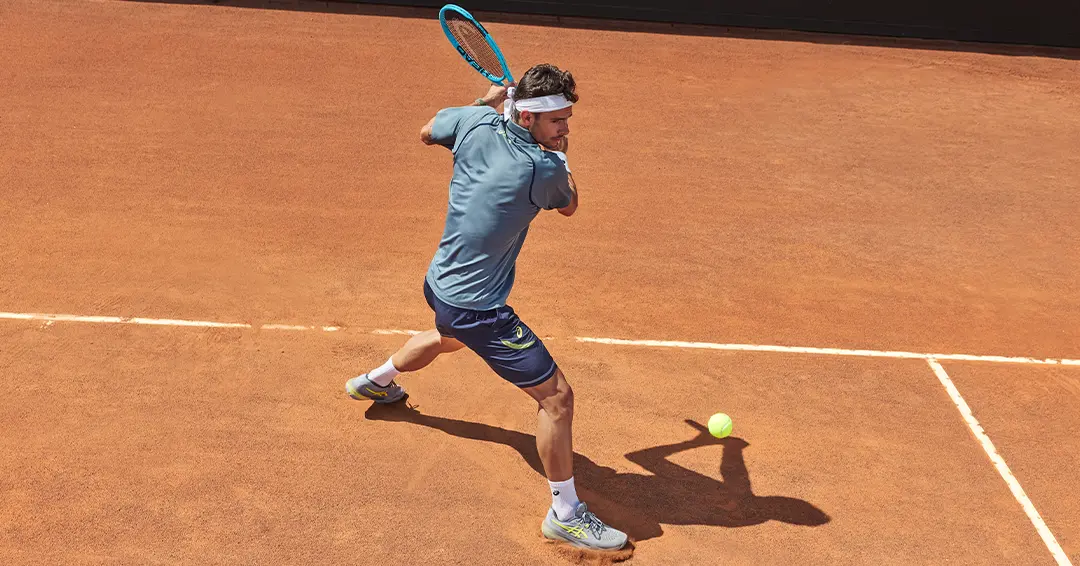
Incorrect hitting technique: the way you hit the ball tends to cause this injury, especially if you "wrist" too much. The backhand is one of the strokes that can affect your elbow the most.
Wrong racket: a wrong choice of racket could cause you to overstrain your arm and lead to multiple injuries, including epicondylitis.
Grip too thin: just like the racket, an overgrip that does not fit the player will end up causing discomfort. Therefore, you should choose one that is neither too narrow nor too thick. We recommend you try several thicknesses until you find the one that feels best to you.
Failure to warm up: if you do not warm up before you play, you're subjecting your muscles to sudden stress, leading to possible injury.
Weak muscles and lack of stretching: lack of exercise weakens your muscles and makes them prone to injury.
Training for too long: if you do a lot of high-exertion movements, your elbow will end up in discomfort.

What are the symptoms of Tennis Elbow?

The most common pain points

Difficulty in bearing weight.
Pain on wrist extension
(focused on the lateral outer part of the elbow).
Pain when stretching the muscle
(Especially when flexing the wrist).
Pain in the forearm.

How do i prevent it?

Here are some common opractices that can be positive to better cope with or prevent this type of injury:
Rest: to get better, you will have to suspend your tennis sessions and/or competitions or at least reduce the frequency of play until the discomfort disappears. When lifting weights, try to lift with the palm of your hand facing upward so as not to overuse the affected muscle.
Apply cold compresses: apply cold compresses or ice to your elbow after the exercise for a few minutes.
Use elbow pads: use an elbow pad for epicondylitis. This will prevent vibration of the forearm and reduce pain.
Exercise the affected area: if the symptoms do not subside with the above treatments, your doctor will probably refer you to a physiotherapist who will provide you with the appropriate exercises according to your degree of injury.

If you suffer from the symptoms mentioned above, the best thing to do is to consult a specialist to carry out a series of tests to determine the extent of the injury and which structures are involved.
Therefore, knowing the causes of Tennis Elbow is a key factor in prescribing appropriate treatment. Your doctor may ask for ultrasound or MRI scans to verify the diagnosis.